When Words Step Aside: The Quiet Power of Shared Stillness in Premium Companionship
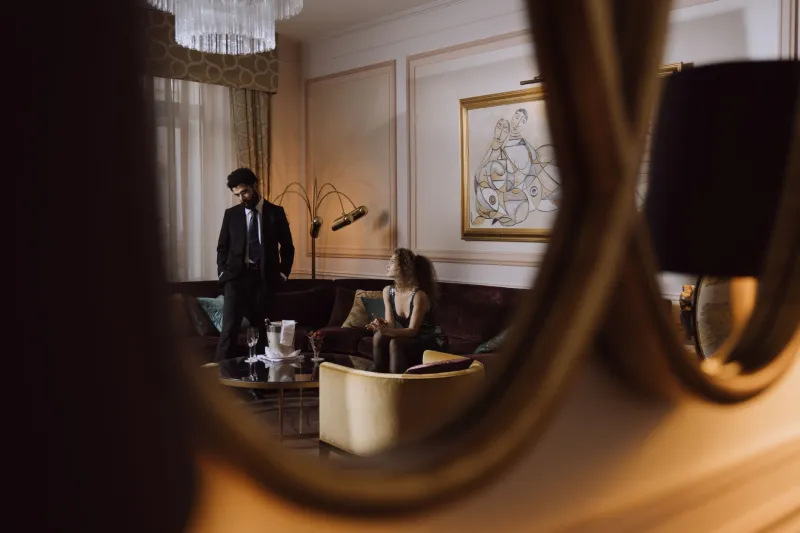
There is a particular kind of relief that arrives when you no longer feel obligated to speak.
For most Americans navigating professional obligations, social calendars, and the relentless cadence of digital communication, silence has become something to be managed rather than savored. We fill it with podcasts during commutes, background television during meals, and reflexive small talk during any pause that threatens to linger too long. The cultural message is clear: silence signals discomfort, disconnection, or worse—disinterest.
And yet, among the clientele who seek premium companionship at the highest tier of the market, a different message is emerging. Increasingly, the capacity to share stillness without strain is not considered a gap in service. It is considered the service itself.
The Overstimulated American and the Search for Stillness
Consider the average professional's day. From the moment a smartphone alarm sounds to the final scroll before sleep, the average American is subjected to an estimated 6,000 to 10,000 marketing messages, dozens of meetings or correspondence threads, and a near-constant expectation of responsiveness. Social interactions, even casual ones, carry a subtle but exhausting subtext: perform your interest, signal your engagement, demonstrate that you are present.
This performance tax accumulates. By evening, or by the weekend, or by the third day of a business trip in an unfamiliar city, what many people crave is not more stimulation. It is the permission to simply be.
Premium companionship, at its most sophisticated, recognizes this need and meets it deliberately. The finest companions understand that presence does not require sound. They have cultivated the emotional intelligence to read when conversation serves their client and when it intrudes upon something more valuable: rest, reflection, or the quiet pleasure of existing alongside another human being without agenda.
What Psychology Tells Us About Comfortable Silence
Researchers studying interpersonal communication have long noted that the ability to sit in comfortable silence with another person is a reliable marker of intimacy and trust. Psychologists sometimes refer to this as "companionate silence"—a state distinct from awkward silence in that it carries no anxiety, no pressure to perform, and no underlying tension seeking resolution.
Compaionate silence requires a particular kind of security from both parties. The person sitting quietly must trust that they will not be judged for their stillness. The companion must possess enough self-assurance and attunement to resist the impulse to fill every pause with chatter. This is a skill, not a personality trait. It is developed through genuine emotional sophistication and a deep understanding of what another person actually needs in a given moment.
For clients of premium companionship services, this distinction matters enormously. An escort who responds to every quiet moment with nervous conversation—however charming or well-intentioned—is subtly communicating that the silence is a problem to be solved. An elite companion who settles comfortably into stillness communicates something far more valuable: you do not need to perform for me.
The Difference Between Filling Space and Holding Space
There is a meaningful distinction in the companionship world between filling space and holding space, and it is worth examining carefully.
Filling space is reactive. It responds to silence as though it were a void requiring content. It produces pleasant conversation, interesting anecdotes, and social lubrication—all of which have their place and value in companionship. But it operates from a premise that equates engagement with output.
Holding space is something different entirely. It is the capacity to be fully present with another person without requiring anything from that presence. A companion who holds space understands that their role in a given moment may be simply to exist nearby—to provide the warmth of human proximity, the comfort of a shared table or a shared view, without the expectation of dialogue.
Clients who have experienced both will describe the difference immediately. One feels like entertainment. The other feels like sanctuary.
For individuals who spend their professional lives in high-performance environments—where every silence is a negotiating tactic and every pause is a signal—the experience of genuine, unpressured stillness with a trusted companion can be genuinely restorative in ways that conversation, however brilliant, cannot replicate.
Why This Quality Is Increasingly Rare
The irony of our hyperconnected era is that genuine presence has become scarcer, not more abundant. Social media has trained an entire generation to measure engagement through output: likes, replies, content produced, reactions generated. Even in face-to-face settings, many people find themselves reaching for their phones the moment a conversational lull appears.
This has created a particular deficit in the companionship market. Clients who seek premium experiences are often sophisticated enough to recognize when a companion is performing presence rather than embodying it. They can sense the difference between a partner who is genuinely comfortable in stillness and one who is managing the silence as a professional obligation.
The companions who have mastered this quality—who can move fluidly between animated conversation and easy quiet, following the client's lead with attunement rather than formula—represent a genuinely rare offering. And the market, as it tends to do, has taken notice.
Seeking Stillness: What Discerning Clients Actually Request
Conversations within premium companionship circles reveal a pattern that might surprise those unfamiliar with the industry's more sophisticated tier. Among requests that experienced clients make when arranging engagements, a notable number involve explicit preferences for companions who are comfortable with quiet.
A long dinner where conversation flows naturally but is never forced. An evening at the theater followed by a walk where nothing needs to be said. A flight or a drive where the companion is simply present—reading, resting, existing—without filling the hours with performance.
These requests are not about disinterest in connection. They are, in fact, among the most intimate requests a client can make. They ask for something that most social relationships cannot provide: the freedom to be unguarded, unperforming, and still accepted.
The Quiet Differentiator
For anyone navigating the premium companionship landscape, the ability to assess a companion's comfort with silence is a meaningful filter. During initial conversations and correspondence, notice whether the companion seems compelled to fill every exchange with charm and content, or whether they demonstrate an ease with pauses—an ability to respond thoughtfully rather than reflexively.
The companions who have genuinely internalized this quality tend to describe it in similar terms: they are present with their clients, not performing for them. They understand that luxury, at its deepest level, is about the removal of pressure—not the addition of stimulation.
In a society that has forgotten how to be quiet, the gift of shared stillness may be the most intimate offering available. Premium companionship, at its finest, does not merely fill hours. It creates the conditions in which another person can finally, fully, exhale.